ITER begins operations at its magnet cold test facility

June 1, 2026, 9:45AMNuclear News
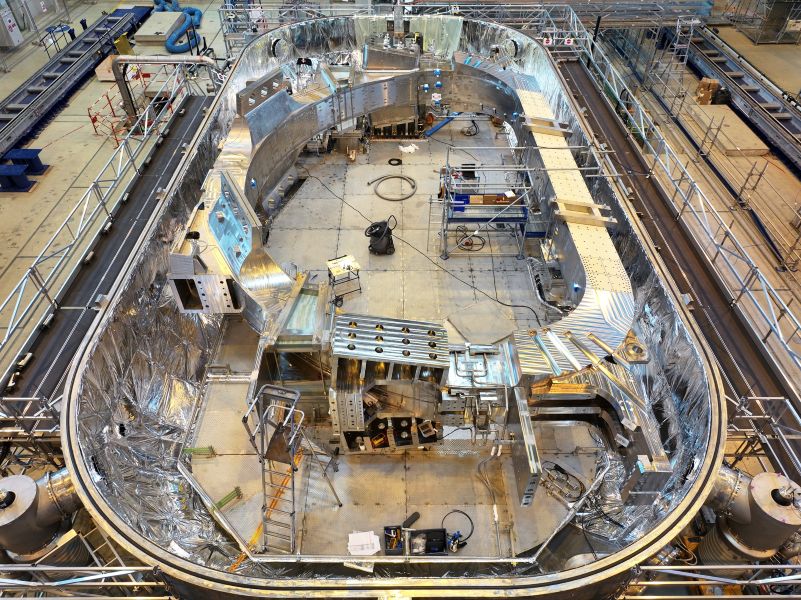
ITER’s TF07 in the cryostat of the magnet cold test facility, prior to the lid being closed. (Photo: ITER)

The ITER Organization has announced that its magnet cold test facility is now in operational mode, allowing the preinstallation testing of superconducting magnets at the fusion reactor’s low operating temperature of 4 Kelvin (−269°C; −452°F) and full current of 68 kiloampere (kA).

General Atomics marks completion of ITER’s superconducting fusion magnet

September 4, 2025, 3:03PMNuclear News
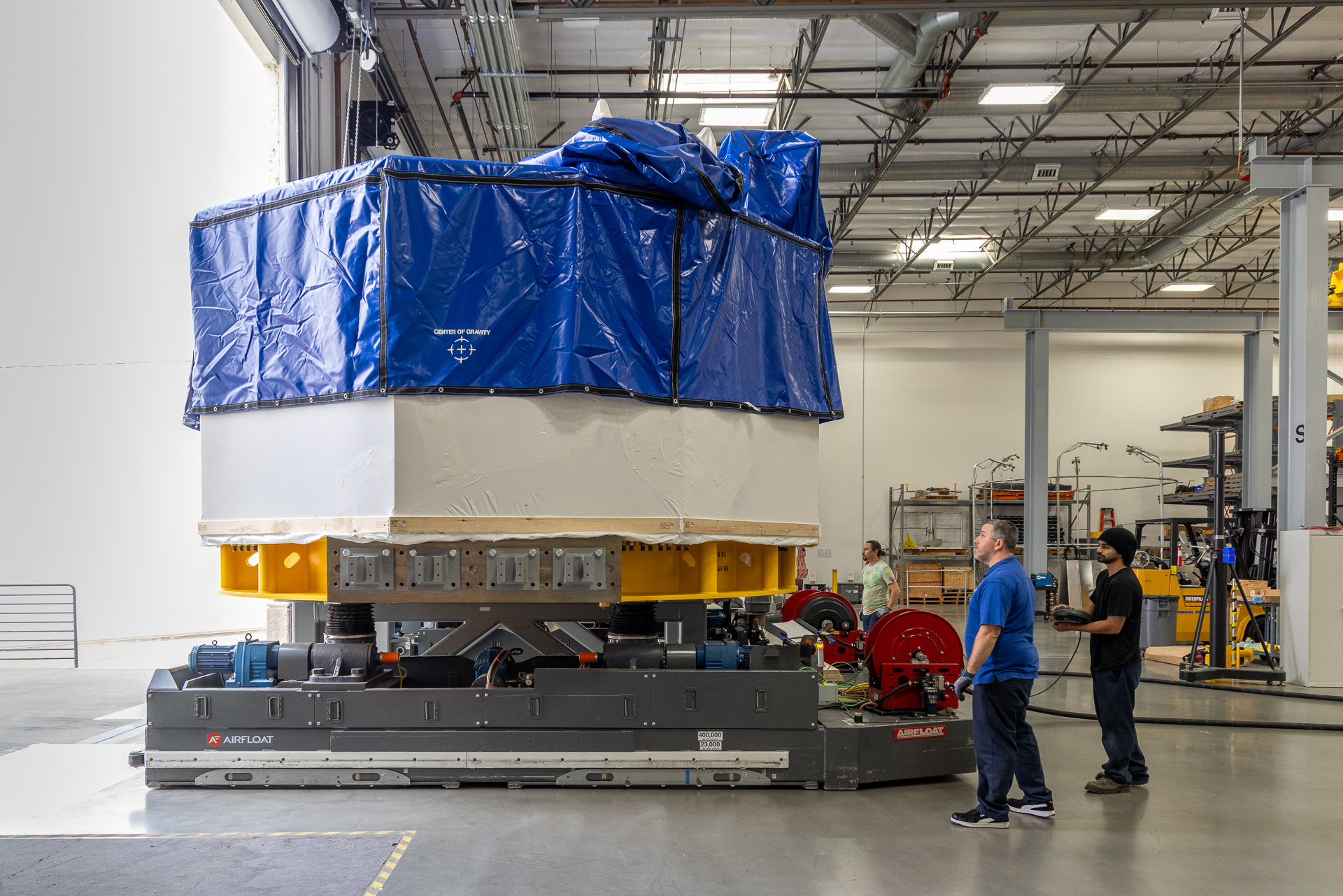
The sixth ITER central solenoid module is prepared to be shipped to France. (Photo: General Atomics)

General Atomics last week celebrated the completion of the central solenoid modules for the ITER reactor being built in southern France. Designed to demonstrate the scientific and technological feasibility of fusion power, the ITER tokamak will be the world’s largest experimental fusion facility.

Fusion power? Yes!

October 12, 2023, 7:00AMNuclear NewsKen Petersen

Ken Petersen
president@ans.org

I have jumped on the fusion power bandwagon! Power from fusion is going to happen. When I look at it, there are several factors that reinforce this. Technology has advanced and moved from basic science/research to engineering solutions. Several breakthroughs in supportive technologies have made fusion power plants a possibility. Finally—and most importantly—the private sector is heavily involved and investing to help move engineering solutions forward. This has resulted in a few dozen fusion companies developing different technologies with the same power generation goals. It is very reminiscent of the development of LW fission reactors in the 1950s and ’60s.

Technology has advanced in regard to materials and especially high-temperature superconducting magnets, high-energy lasers, and computer modeling. These improvements have allowed machines to become smaller and achieve the density, temperature, and time needed for fusion to occur.